
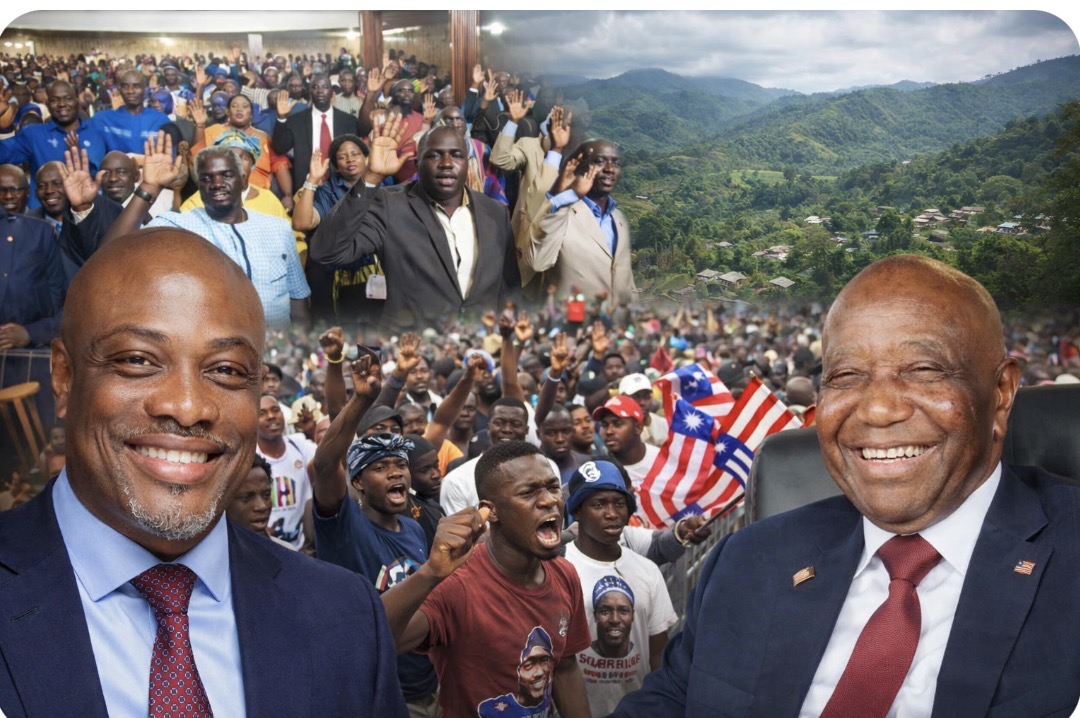
NIMBA LAWMAKER TAA WONGBE WARNS: “10 POLITICALLY INCONVENIENT TRUTHS LIBERIANS MUST FACE BEFORE 2026”
Monrovia, Liberia — Representative Taa Wongbe of Nimba County has ignited national debate after releasing a sharply worded political commentary titled “10 Politically Inconvenient Truths Liberians Need to Hear Before 2026,” a sweeping critique of Liberia’s governance trajectory, opposition paralysis, youth unrest, and emerging ethnic political calculations.
In a post widely circulated on social media, Wongbe argued that Liberia is entering a dangerous political phase marked by economic hardship, eroding public trust, and a political class disconnected from everyday “bread and butter” realities.
Governance without Relief
According to the Nimba lawmaker, while the current administration points to declining rice and fuel prices and international engagements, most Liberians remain economically suffocated due to unemployment and a shrinking informal sector. He warned that statistics without income mean little to households struggling to eat.
Wongbe further accused the ruling Unity Party of “governing like an opposition,” citing public infighting, online insults directed at citizens, and unresolved corruption concerns, including lingering questions surrounding the Presidential Villa project in Foya.
Collapse of the NGO Economy
One of the most sobering warnings centered on the decline of Liberia’s NGO-driven economy. With global donor funding—particularly USAID—shrinking, Wongbe said thousands of Liberians who depended on “soft dollars” are now exposed, while the government lacks a credible alternative economic plan.
“From drivers and maids to program officers and small businesses, the pain is real,” he wrote, adding that the administration appears unprepared “financially and mentally” to fill the gap.
Legislature in Crisis
Turning inward, Wongbe delivered a blistering assessment of the Legislature, calling it “a national embarrassment.” He cited leadership crises, self-serving politics, rushed legislation, and public scandals that have eroded the institution’s moral authority.
“What should be a noble institution has drifted from service to self,” he warned.
A Leaderless Third Lane
Wongbe argued that Liberians are increasingly rejecting the traditional Unity Party–CDC binary and yearning for a credible “Third Lane.” However, he lamented that the opposition remains fragmented and traumatized, with no visible coalition capable of capitalizing on public discontent.
He cautioned that without a viable alternative emerging by late 2026 or early 2027, voters may default again to familiar political forces.
Youth as the Quiet Majority
With young people forming the largest and fastest-growing voting bloc, Wongbe described Liberia’s youth as restless, economically excluded, and largely leaderless. He said future protests will center on opportunity and survival rather than ideology, warning that “youth energy without structure is combustible.”
Diaspora Influence Fading
The Nimba representative also challenged the political relevance of the diaspora, arguing that social media commentary and remittance-based influence are losing traction among citizens on the ground. Without sustained local engagement, he said, the diaspora risks remaining “commentary, not consequence.”
Tribal Arithmetic over Ideology
Another “inconvenient truth,” according to Wongbe, is the quiet rise of ethnic and regional voting calculations, particularly in North Central counties. While acknowledging the political power of numbers, he warned that “turn people’s turn” politics weakens accountability and lowers expectations for governance.
Nimba: Decisive but Fragmented
While reaffirming Nimba County’s decisive electoral importance, Wongbe stressed that the era of a single political godfather is fading. He noted that Nimba is becoming a competitive space of interests and influencers, even as it remains loyal to its sons and daughters.
Early Campaign Fever
Wongbe predicted that 2026 will feel like a full-blown election year, fueled by rising political temperatures and combative rhetoric from government officials. He warned that such behavior risks deepening polarization and destabilizing governance.
CDC and the Weight of History
Addressing the opposition Congress for Democratic Change, Wongbe said former President George Weah remains personally popular, but the CDC has failed to honestly confront its governance record. He criticized sanctioned former officials who now “lecture the nation on governance,” calling the strategy unserious and unconvincing.
A Call for Reflection
Wongbe concluded by emphasizing that disagreement with his views is expected—but reflection is necessary.
“If these truths weren’t inconvenient, they wouldn’t matter,” he wrote, signing off with a confident warning: “See you in 2026. Long live Liberia.”
The statement has since sparked intense debate across political lines, with many praising its candor and others accusing the lawmaker of political grandstanding. What is clear, however, is that Representative Taa Wongbe has thrown down a gauntlet ahead of Liberia’s next political cycle—one that few can easily ignore.

The Truth Is Our Guide